A couple of weeks ago I started writing a series about my time in the forces and some of the things that I got up to (okay, we haven’t covered what I got up to yet, but we will!)
Anyway, today I’m going to be telling a bit more about what happened back then, and who knows. Maybe we’ll get the chance to have a look at what happens today as well, though I think the only major difference will be the kit that the average ‘Squaddie’ uses today as opposed to what we had.
Cambrai Barracks
But first, we had to get from Birmingham in the Midlands to Catterick in North Yorkshire via train. That was no mean feat in the first place, and no one was showing the way. We were simply given a travel warrant and told that the nearest station to the camp was ‘Darlington’ and we should make our own way.
There were four of us going that day. We found out that every week the Army ran these recruitment courses and people were either sent home to await a call or sent straight to whatever camp was the training base for their units. We were Army Air Corps, but our training unit would be the Royal Armoured Corps. The training Regiment was the Royal Scots Dragoon Guards or Scots DGs for short (and don’t forget to roll the ‘R’s as that’s the only way they’d hear the name said!
Tradition is important
that’s one of the first things you learn about the armed forces, not that you’re living on past glories (unlike what a lot of people who’ve never served think) but because you need to learn what the unit did in the past so as to make sure you shape up and are fit to carry the name forward, and the Scots DGs had and have a big reputation to live up to, take a look.
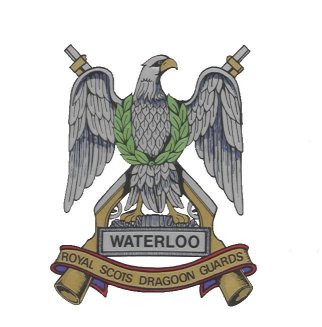
The Cap badge says it all. It’s a reminder that one of their ancestor regiments was at Waterloo, and one of their soldiers captured a French Eagle in the battle, this is more than just a Battle honour, it’s a statement.
Nine weeks of intense training with the Scots DGs for us. The first six were the basics with our troop, then after that, we would be moved to the last part of the training as our troop would be going on to their trade training (we had another seven months of that, but all over the country) so the last three weeks were spent with the troop that was about to ‘pass out’ as they did their last part (which was by far the most fun)
Basic training is where the Army teaches you what it means to be a soldier. But you don’t just run straight into it, there’s a whole heap of stuff you need to know and be able to do before they’ll even let you anywhere near any of the kit!
The four of us arrived on a Thursday afternoon and were told to settle in, but training would start the following Monday, meanwhile, we got to have a look around the camp, not that there was much to see.
Middle of Nowhere
Anyone who’s been there knows that Catterick is an Army Barracks in the middle of nowhere. The nearest town (Darlington) is a good ten miles away, and apart from the NAAFI I don’t think there was even a place to get a cup of tea, let alone a pint of beer, and everywhere we looked were recruits who took great delight in telling us what was in store for us (they were mostly finishing, or told us about the parts they’d finished) and there was no ‘starting gently’ and building up. It started with the pace that they meant to continue at, and they had nine weeks to turn us into soldiers that they could trust to ‘have their backs’ in a tight situation.
By the way, the Army has a term for a new recruit, and it’s not really a rude one but sounds strange when you first hear it. From the day you enlist until you’ve been in the Army a year and a day you’re a ‘SPROG’ but once you’ve been there more than that you become a ‘TROG’ or Troglodyte. A title you wore with pride, even though we had no idea what it meant!
Anyway, we’ll go into that a bit more next time. Bye for now
 Lawrence's letters